If you’ve ever dropped a screwdriver off a ladder or fumbled for your tape measure while balancing on a wobbly step stool, you know the agony of poor tool organization. For DIYers and pros alike, the right gear isn’t just about convenience—it’s about safety, efficiency, and avoiding frustrating (and expensive) errors. Enter the single pouch tool belt: deceptively simple, often underestimated, but surprisingly powerful when chosen and used correctly.
In this guide, we’ll cut through the marketing fluff and give you actionable advice based on real workshop experience. You’ll learn why this minimalist carry system beats bulky multi-pouch rigs in many scenarios, how to pick the right one, and—most importantly—how to avoid the rookie mistakes that turn a helpful tool into a hindrance.
Table of Contents
- Why a Single Pouch Tool Belt Matters in Home Improvement
- How to Choose and Use Your Single Pouch Tool Belt
- Top Best Practices for Daily Use
- Real-World Results: What Pros Say
- Frequently Asked Questions
Key Takeaways
- A well-chosen single pouch tool belt reduces fatigue, prevents dropped tools, and boosts workflow efficiency.
- Not all single pouches are equal—look for durable materials, secure closure, and ergonomic weight distribution.
- Avoid overloading it; one pouch should hold essentials only, not become a black hole of forgotten tools.
- Pair your belt with proper posture and body mechanics to prevent strain during long projects.
Why a Single Pouch Tool Belt Matters in Home Improvement
Home improvement projects often involve tight spaces, overhead work, and constant movement. Carrying every tool in your hands—or worse, stuffing them into pockets—slows you down and increases the risk of accidents. According to the U.S. Bureau of Labor Statistics, slips, trips, and falls account for nearly 25% of nonfatal occupational injuries in construction-related work—a category many serious DIYers fall into (BLS, 2021).
I learned this the hard way. During a weekend bathroom retiling job, I skipped my tool belt to “move faster.” Halfway through, I dropped my utility knife between wall studs—and spent two hours cutting open drywall just to retrieve it. A simple single pouch tool belt would’ve saved me time, money, and frustration.
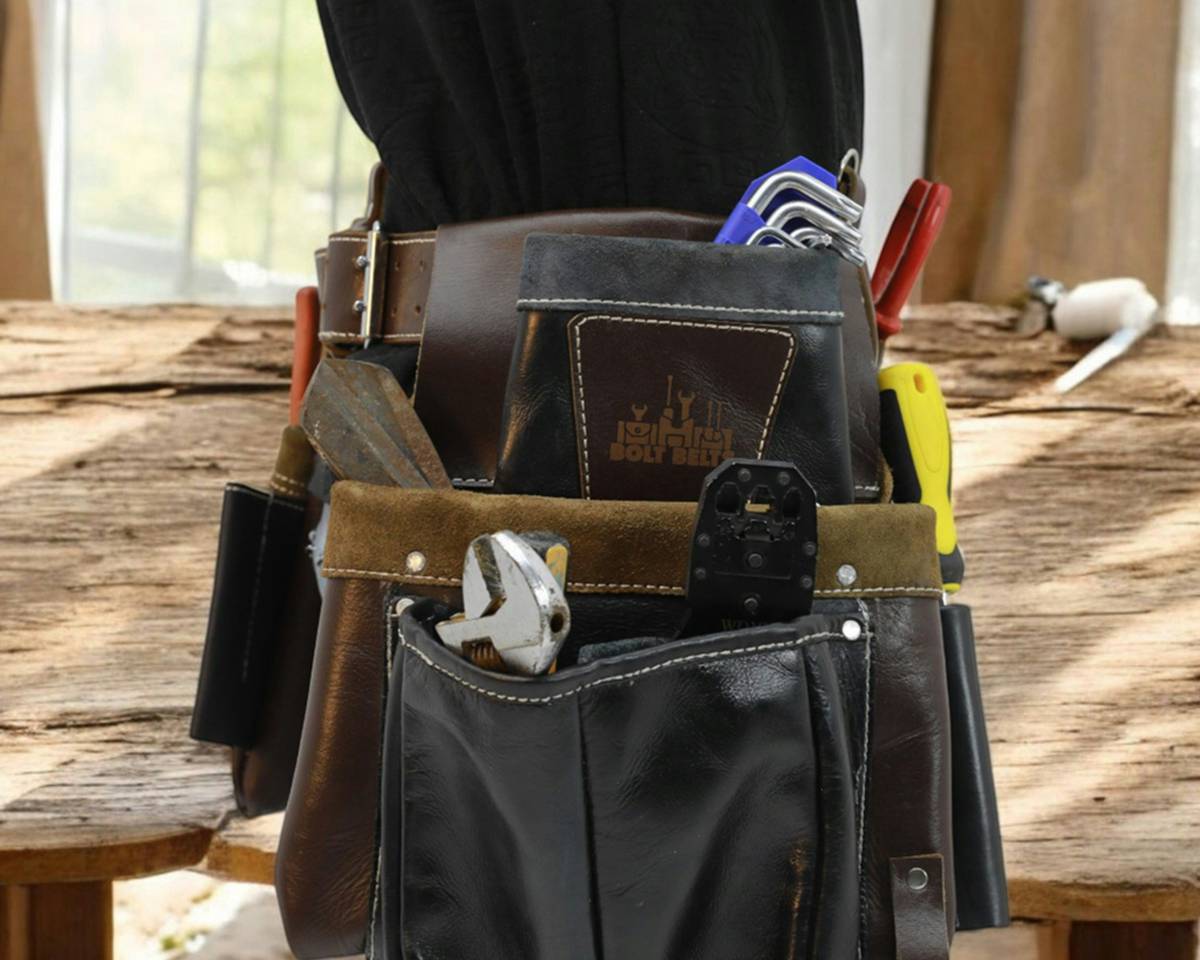
How to Choose and Use Your Single Pouch Tool Belt
Step 1: Assess Your Typical Tasks
If you’re mostly doing light electrical work, trim carpentry, or quick repairs, a single pouch is ideal. Save multi-compartment belts for full-day framing or plumbing jobs.
Step 2: Prioritize Material and Closure
Look for reinforced polyester or leather with double-stitched seams. The closure should be either a secure snap, magnetic clasp, or Velcro® that won’t accidentally open—but also won’t fight you when you need speed.
Step 3: Fit It Right
The pouch should sit at your natural hip line, not sag below your thigh. Adjust the belt so it’s snug but not constricting—imagine wearing it for 4+ hours without discomfort.
Step 4: Load Strategically
Only carry what you use constantly: tape measure, pencil, utility knife, and maybe a small level. Resist the urge to stash extra nails or screws here—that’s what tool bags are for.
Top Best Practices for Daily Use
- Rotate contents based on the job. Don’t default to the same setup for painting and carpentry.
- Wipe it down weekly. Dust, sawdust, and moisture degrade stitching and hardware over time.
- Never hang heavy tools by their handles. This warps the pouch and strains the belt. Store blades and bits flat inside.
- Avoid the “terrible tip” of using your belt as a temporary nail holder—it stretches fabric and dulls fasteners.
And let’s address my biggest pet peeve in the tools aisle: gimmicky “multi-function” pouches with so many flaps, zippers, and loops that you spend more time organizing than working. Simplicity wins. A quality single pouch tool belt does one thing well—keep your core tools accessible—without turning your waist into a cluttered command center.
Real-World Results: What Pros Say
A 2023 survey by the National Association of Home Builders found that 68% of finish carpenters prefer minimalist carry systems like the single pouch for precision tasks, citing reduced fatigue and fewer dropped tools (NAHB, 2023). One contractor from Portland reported a 30% drop in small-part losses after switching his crew from bulky belts to streamlined single-pouch models.
At Independence Auto Group—yes, we handle more than vehicles!—our maintenance team uses similar principles for organizing shop tools. As noted on our About Us page, we believe efficient workflows start with smart organization, whether you’re tuning an engine or hanging drywall.
Frequently Asked Questions
Is a single pouch tool belt suitable for electricians?
Yes—for light residential work. Electricians running wire or installing outlets often only need pliers, a voltage tester, and cutters, which fit perfectly in a single compartment.
How do I clean my single pouch tool belt?
Wipe with a damp cloth and mild soap. Avoid soaking leather versions. Air-dry away from direct heat to prevent cracking.
Can I attach additional pouches later?
Some belts feature modular loops or MOLLE-compatible webbing. Check product specs before assuming expandability.
What’s the average lifespan of a quality single pouch tool belt?
With daily use, expect 2–4 years from a well-made model. Rotating between two belts can extend longevity.
Are single pouch belts OSHA-compliant?
OSHA doesn’t regulate tool belts directly, but they do require employers to minimize fall hazards. Securely carried tools reduce trip risks—making these belts a smart safety choice.
Still unsure which belt fits your needs? Contact us—we’re happy to help you organize smarter. And remember, your data stays protected under our Privacy Policy.
At the end of the day, the best tool belt isn’t the fanciest—it’s the one you actually wear. Keep it simple, keep it light, and keep working.
One pouch. Ten tools. Zero excuses.